Modélisation des écoulements multiphasiques réactifs
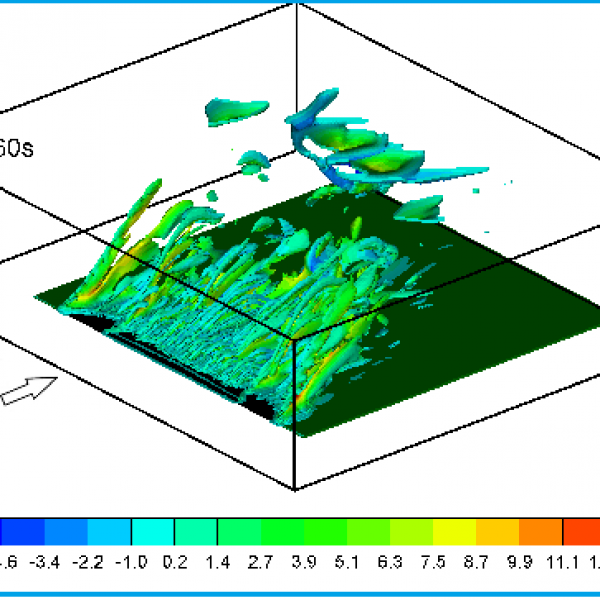
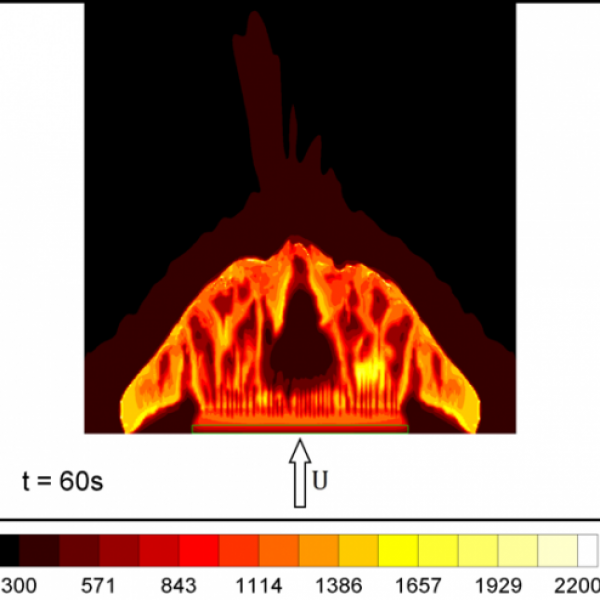
Modélisation et simulation de la propagation des feux de forêts
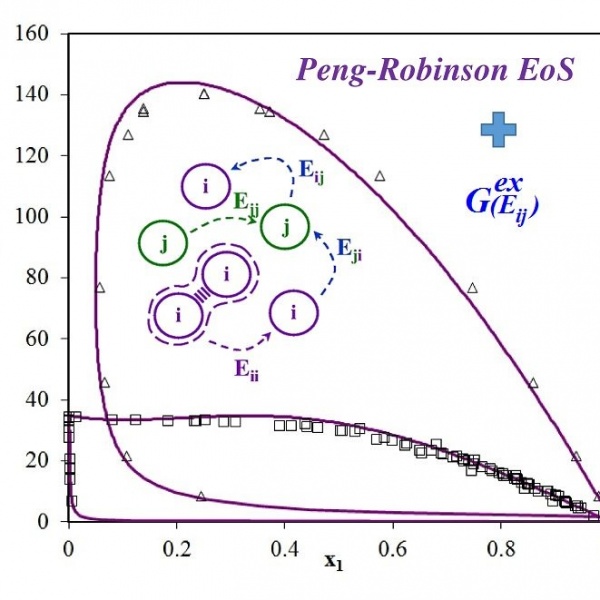
Thermodynamique des mélanges
Thermodynamics, Numerical Waves, Interfaces, Combustion Team
Présentation
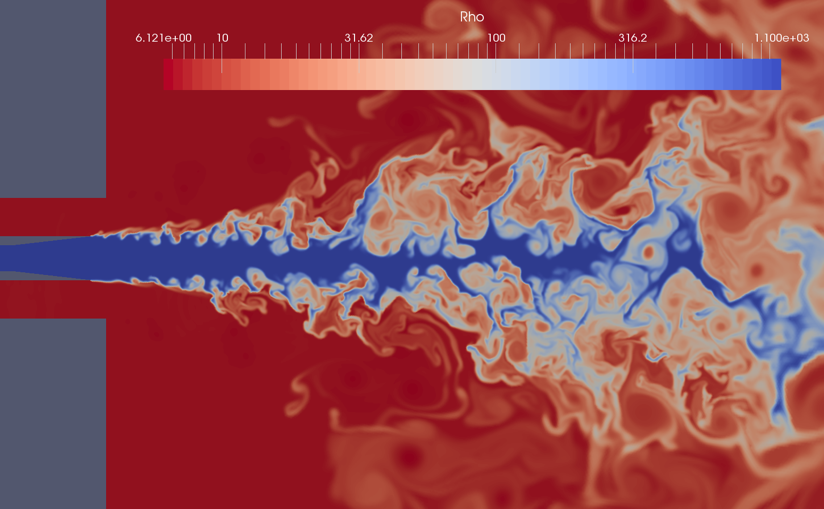
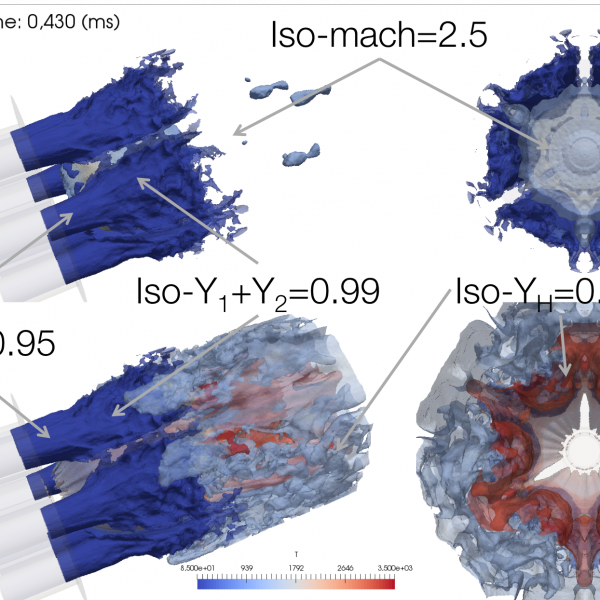
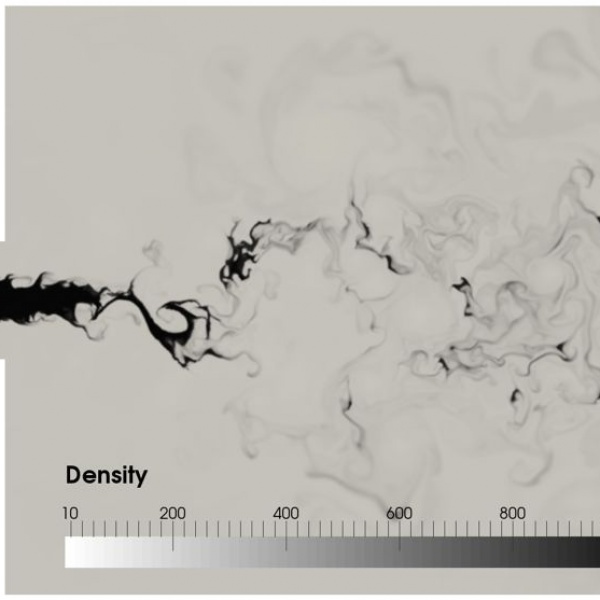
The TONIC team is developing an activity of modeling of strongly multi-scale phenomena. It covers in particular multiphase and/or reactive flows, from the scale of the isolated injector (a few mm) to the scale of a fully developed forest fire (several hectares).
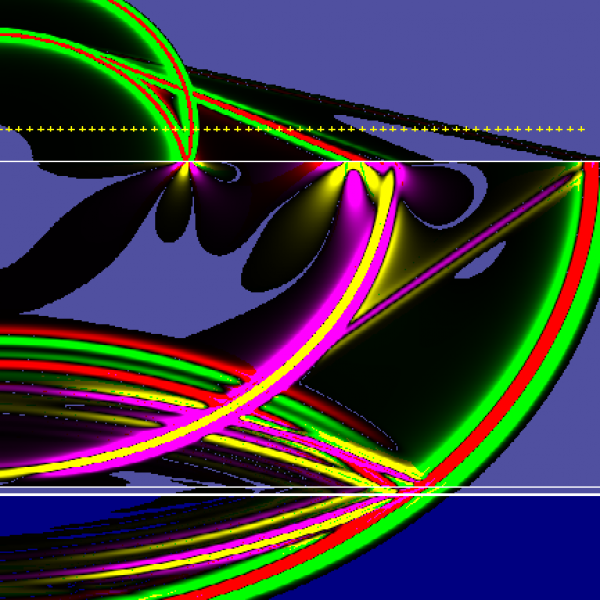
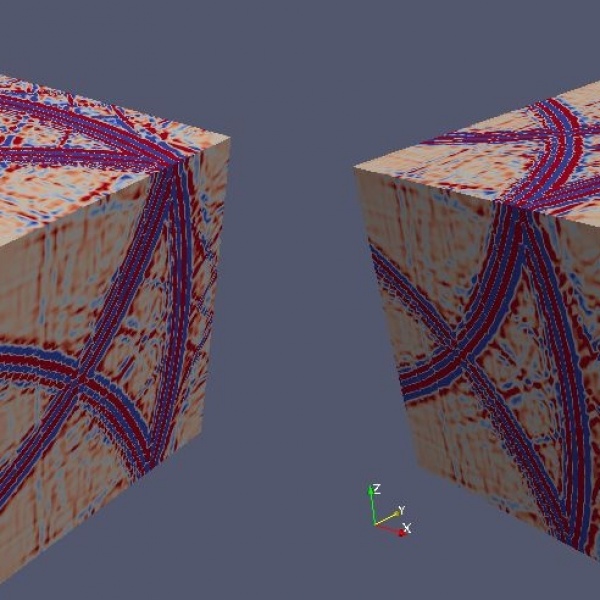
Adapted numerical methods are developed in parallel, in particular for soil imaging (detection of slicks by acoustic analysis), or for the modeling of radiative transfers.
In parallel to these multi-scale developments, analytical work is carried out to support the construction of models. An important research effort is devoted to the modeling of the thermodynamics of multiphase mixtures (thermochemical equilibrium calculations, complex thermodynamic closures), or to the development of reduced kinetic models for combustion.
Marcel Désor, Amit Kumar Haldar, Nikolai Kosuch, Wolfgang Polifke, Grégoire Varillon. Large Eddy Simulation of Premixed Hydrogen Flame Flashback Including Conjugate Heat Transfer and Soret Effect. Journal of Engineering for Gas Turbines and Power, 2026, 148 (10), ⟨10.1115/1.4072458⟩. ⟨hal-05733661⟩ Plus de détails...
Boundary-layer flashback is a major risk for lean-premixed combustion of H2-based fuels or fuel blends in low-emission gas turbines. This study demonstrates and critically assesses a methodology based on large eddy simulation (LES) coupled with conjugate heat-transfer (CHT) to predict boundary-layer flashback in turbulent H2 flames without ad hoc parameters. By coupling LES with CHT, we determine flashback limits as observed experimentally on a backward-facing step while avoiding the use of ad hoc thermal boundary conditions. The sensitivity of predictions to modeling and numerical parameters is assessed. It is demonstrated that the model presented is insensitive to external thermal boundary conditions applied on the outer surfaces of the solid parts. Accurate representation of the wall heat-flux in the immediate vicinity of the flame, proper flame resolution, as well as Soret diffusion are identified as key parameters for modeling. In particular, Soret diffusion locally enriches the boundary layer whenever the fuel/air mixture is preheated by heat exchange with solid components. Consequently, neglecting Soret diffusion leads to a nonconservative misprediction of the flashback limit. Flame thickening results in excessive heat loss in the flame zone and consequently leads to a systematic misprediction of the flashback limit. The proposed LES+CHT framework gives insight into the relationship of heat transfer, mixture preheating, and flame motion. The methodology is well-suited to predict thermal runaway limits, where the flame seems stable, but flashes back after sufficiently long operation. The differences between short-term flashback and thermal runaway, and the consequential difficulty of consistent validation with experiment are discussed.
Marcel Désor, Amit Kumar Haldar, Nikolai Kosuch, Wolfgang Polifke, Grégoire Varillon. Large Eddy Simulation of Premixed Hydrogen Flame Flashback Including Conjugate Heat Transfer and Soret Effect. Journal of Engineering for Gas Turbines and Power, 2026, 148 (10), ⟨10.1115/1.4072458⟩. ⟨hal-05733661⟩
Journal: Journal of Engineering for Gas Turbines and Power
Jacques Henri Balbi, François-Joseph Chatelon, Miguel Cruz, Thierry Marcelli, Sofiane Meradji, et al.. The Balbi operational model, a simplified physical model for surface fires. Part I – modelling. International Journal of Wildland Fire, 2026, 35 (9), ⟨10.1071/WF25203⟩. ⟨hal-05739945⟩ Plus de détails...
Background Previously published versions of the ‘Balbi model’ describing surface fire propagation consist of a set of equations based on simplified conservation laws. Their main equation calculating the fire rate of spread (ROS) relied on an iterative process to account for the effect of environmental drivers. Aims We formulated a new version of this model that considers a 3D flame front composed of peaks and troughs, integrates distinct radiation and convection heat transfer mechanisms, and outputs the physical characteristics of a flame front as they are influenced by weather, fuel and topographical conditions. A simpler operational version, composed of only one equation, is also exhibited. Methods While maintaining its characteristics (physics-oriented, fully predictive and faster than real time) from older versions, the global structure of the proposed model is changed to obtain a set of algebraic equations easy to solve and to code. Key results We described the model and provided an analysis of model response to key environmental variables. Model evaluation against independent data is provided in a companion paper. Conclusions A simplified physical propagation model for surface fires has been exhibited. Implications The algebraic nature of the model’s equations makes it suitable to incorporate into fire management decision-making tools to support suppression activities.
Jacques Henri Balbi, François-Joseph Chatelon, Miguel Cruz, Thierry Marcelli, Sofiane Meradji, et al.. The Balbi operational model, a simplified physical model for surface fires. Part I – modelling. International Journal of Wildland Fire, 2026, 35 (9), ⟨10.1071/WF25203⟩. ⟨hal-05739945⟩
François Joseph Chatelon, Miguel Cruz, Jacques Henri Balbi, Thierry Marcelli, Sofiane Meradji, et al.. The Balbi operational model, a simplified physical model for surface fires spread. Part II – model parameterisation and evaluation. International Journal of Wildland Fire, 2026, 35 (9), ⟨10.1071/WF25204⟩. ⟨hal-05739946⟩ Plus de détails...
Background The ‘Balbi model’ is a simplified physical model for surface fires which provides the main physical characteristics of a fire front and its rate of spread (ROS) as a function of general environmental conditions. In the first part of this work, we describe a simplification of this model, which we call Balbi operational model, that leads to a set of explicit algebraic equations. Aims After calibrating the model, we aim to assess its performance by comparing the predicted ROS with laboratory- and field-measured ROS. Methods A small set (n = 40) of laboratory fires was used to find the required model parameters. We evaluated the model against (1) a set of laboratory experimental fires (n = 549), representing a range of fuel bed types and arrangements, and (2) a set of shrubland and grassland field fires (n = 357) from different world regions. We assessed the predictive capacity of the model and compared it with other empirical and semi-empirical models. An analysis on the importance of each heat transfer mechanism is performed. Key results The proposed model performs as well as its previous iteration on shrubland fires and is found to increase accuracy when tested against grassland fires. Conclusions The operational ‘Balbi model’ shares many properties with empirical models, while grounded on physical heat transfer principles. The model is suitable for application to several types of fuels and configurations of slope and wind. Implications Its intrinsic characteristics and verified fit make it a candidate to be used in wildfire propagation simulators.
François Joseph Chatelon, Miguel Cruz, Jacques Henri Balbi, Thierry Marcelli, Sofiane Meradji, et al.. The Balbi operational model, a simplified physical model for surface fires spread. Part II – model parameterisation and evaluation. International Journal of Wildland Fire, 2026, 35 (9), ⟨10.1071/WF25204⟩. ⟨hal-05739946⟩
Gabriel Meletti, Stéphane Abide, Stephane Viazzo, Jezabel Curbelo, Uwe Harlander. Wave-like spirals and spontaneous oscillations in strato-rotational flows. Journal of Fluid Mechanics, 2026, 1035, pp.A38. ⟨10.1017/jfm.2026.11559⟩. ⟨hal-05636292⟩ Plus de détails...
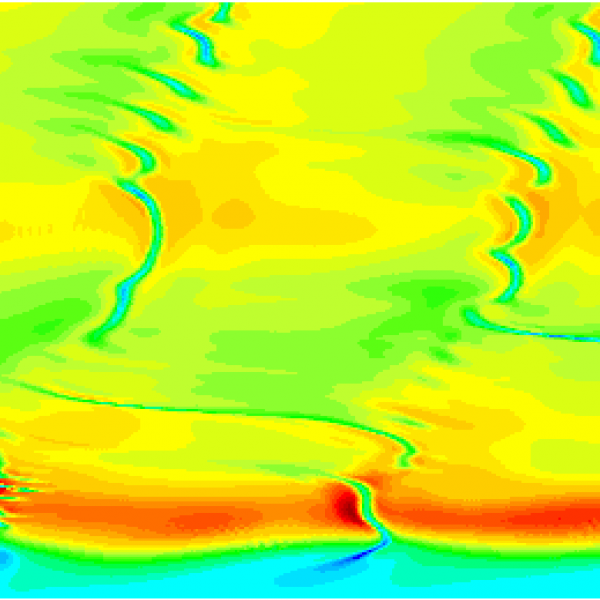
This study investigates the dynamics of strato-rotational instability (SRI) in a stratified, rotating fluid, focusing on the interaction between axial modes and spiral components. Through numerical analysis, we find that SRI induces oscillatory behaviours that change the mean flow, leading to the selective activation of distinct axial wavenumbers associated with upward and downward propagating spiral modes. These results suggest wave–mean flow interactions. The use of Radon transforms (RTs) allowed us to separate these spiral components, showing that each upward and downward component was individually modulated, but out of phase with each other. Inspired by the RT findings, a simplified toy model was developed to interpret the spiral pattern changes linked to amplitude modulations. The model considers two wave-like spirals propagating in opposite axial directions, linearly interacting. By incorporating out-of-phase individual spiral modulations, the model reproduces the observed spiral pattern transitions, offering a straightforward interpretation of the underlying physical processes. To explore the mechanism of individual spiral modulations, we consider a quasi-biennial oscillation (QBO)-like framework derived from the Navier–Stokes aligns in a rotating frame. These findings contribute to a better understanding of low-frequency SRI dynamics and may offer insights into similar phenomena in geophysical and astrophysical contexts.
Gabriel Meletti, Stéphane Abide, Stephane Viazzo, Jezabel Curbelo, Uwe Harlander. Wave-like spirals and spontaneous oscillations in strato-rotational flows. Journal of Fluid Mechanics, 2026, 1035, pp.A38. ⟨10.1017/jfm.2026.11559⟩. ⟨hal-05636292⟩
Grégoire Varillon, Thomas Ludwig Kaiser, Philipp Brokof, Dominik Weißbach, Kilian Oberleithner, et al.. Couplings in a non-uniform compressible swirling jet with a modelled swirler. Journal of Fluid Mechanics, 2026, pp.A61. ⟨10.1017/jfm.2026.11497⟩. ⟨hal-05674153⟩ Plus de détails...
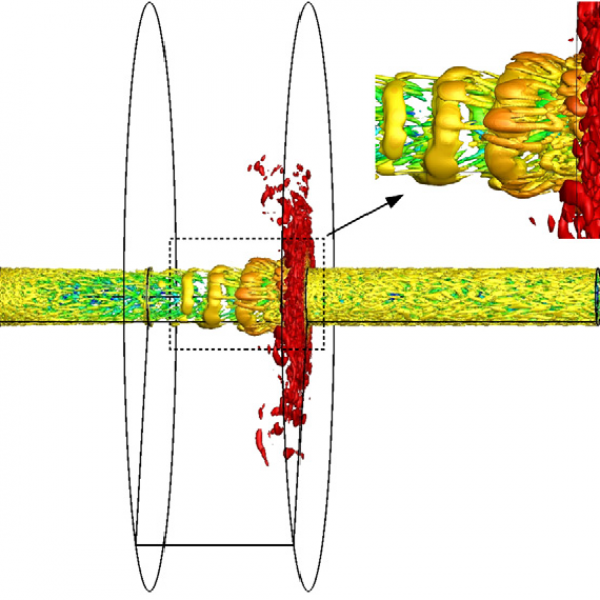
We give evidence of non-modal amplification mechanisms driven by swirl intensity from a bi-global linear analysis of a cold swirling flow representative of a premixed swirl burner: non-uniform, compressible, turbulent, enclosed and subject to vortex breakdown passed the expansion. The monolithic computational approach embeds a realistic axisymmetric swirler model in the computational domain. The amplification mechanisms are identified by stability and resolvent analysis under variations of the length of the annular duct section and combustion chamber, the swirl intensity and the swirler position. While the spectrum is affected by changes in the length only, the gain of the resolvent strongly depends on the swirl intensity. The results suggest an acoustically dominated amplification in the combustion chamber and a non-modal hydrodynamic-dominated process driven by the swirl intensity. Inertial waves carrying swirl fluctuations play a key role in the latter. The results are complemented by a resolvent sensitivity analysis that identifies the tip of the inner recirculation region and the surrounding shear layer as a wavemaker region that drives at high swirl numbers the non-modal amplification. The sensitivity of that region also enables the transfer of azimuthal momentum perturbations to axial momentum, hence activating a longitudinal acoustic resonance from azimuthal fluctuations.
Grégoire Varillon, Thomas Ludwig Kaiser, Philipp Brokof, Dominik Weißbach, Kilian Oberleithner, et al.. Couplings in a non-uniform compressible swirling jet with a modelled swirler. Journal of Fluid Mechanics, 2026, pp.A61. ⟨10.1017/jfm.2026.11497⟩. ⟨hal-05674153⟩
8 juin 2026
- Modeling of supercritical CO2 flow and heat transfer applied to an innovative thermal machine structure / Soutenance de thèse Jian Cardenas Cabezas
Doctorant : Jian CARDENAS CABEZAS
Date et lieu : le lundi 8 juin 2026 à 14h00 dans l’Amphithéâtre N°3, Centrale Méditerranée ; 38 rue Frédéric Joliot Curie,13013 Marseille
Abstract: Improving the energy efficiency of industrial systems is a major challenge in the energy transition. A significant share of primary energy is dissipated as waste heat, particularly at low and medium temperatures, where recovery solutions remain limited. In this context, supercritical carbon dioxide (sCO2 ) cycles are attracting growing interest because of their compactness, their high efficiency potential, and the favorable properties of the fluid near the critical point. However, their deployment is still hindered by technological barriers and by the difficulty of accurately modeling the real fluid. This thesis investigates an innovative concept of thermally driven compression, called SHREC, developed with the industrial partner CIXTEN. Unlike conventional Brayton cycles, which rely on an electrically driven mechanical compressor, the SHREC device directly converts thermal energy, ideally recovered from waste heat, into compression work. By reducing the need for mechanical compression, it aims to lower auxiliary electricity consumption and improve the overall efficiency of sCO2 cycles. The main scientific difficulty lies in modeling supercritical CO2. Near the critical point, small variations in temperature or density induce strong nonlinear changes in density, heat capacity, compressibility, and transport properties. Under such conditions, ideal-gas assumptions or constant-property approximations become unsuitable. In addition, the SHREC device operates at low Mach number and in complex geometries, which imposes stringent requirements in terms of stability, mass conservation, and thermodynamic consistency. To address these challenges, a multi-scale modeling approach was developed. At the system scale, a zero-dimensional (0D) thermodynamic model, based on a cubic equation of state, was established to describe the behavior of the supercritical fluid. It allows rapid prediction of overall performance and enables cycle analysis. Experimental tests on a reduced-scale prototype were carried out to measure the evolution of pressure, temperature, produced power, coefficient of performance, and exergy destruction. The results show that the main irreversibilities are located in the expander-compressor unit and in the main heat exchangers. At the local scale, a three-dimensional numerical framework based on the Lattice Boltzmann Method was developed and adapted to real-fluid conditions. A compressible low-Mach-number formulation was implemented and coupled with a cubic equation of state to reproduce supercritical thermodynamic effects. Complex geometries were handled using the Immersed Boundary Method. The approach was first validated on supercritical jets from the literature, and then applied to the SHREC device to resolve transient temperature and pressure fields. The comparison between CFD simulations and the 0D model shows that the assumption of instantaneous pressure equilibrium between the chambers is not strictly satisfied. The 0D model does not capture local pressure imbalances, but it reproduces the overall compression and expansion dynamics correctly, whereas the CFD simulations provide a detailed description of the internal flow and heat transfer mechanisms. This work shows that reliable investigation of sCO2 systems requires a consistent combination of real-fluid thermodynamics, reduced-order modeling, numerical simulations, and experimental validation. It contributes to the development of thermally driven compression technologies for waste heat recovery and lays the foundations for compact systems for next-generation energy cycles.
M. RIBERT Guillaume INSA Rouen Normandie - Examinateur
Mme RASPO Isabelle CNRS, M2P2 - Examinatrice
M. MELDI Marcello ENSAM - Président du Jury
M. FERRASSE Jean-Henry Aix Marseille Université, M2P2 - Co-encadrant
M. FAVIER Julien Aix Marseille Université, M2P2 - Co-Directeur de thèse
M. SCHMITT Thomas CNRS, EM2C -Rapporteur
M. SILVA Gonçalo Universidade de Évora, Portugal - Rapporteur
6 février 2026
- Study of turbulent transport of energetic particles in nuclear fusion plasmas nuclear fusion plasmas by trajectory simulations and artificial intelligence techniques / PhD Defense Benoît Clavier
Doctorant : Benoît CLAVIER
Date et lieu : le vendredi 6 février à 14h00, M2P2 - salle Labus, Centrale Méditerranée
Abstract: This thesis studies the turbulent transport of charged particles in magnetized fusion plasmas by combining reduced turbulence models, numerical trajectory simulations, and data-driven approaches based on artificial intelligence. After presenting the physical framework of radial transport in a tokamak and the Hasegawa–Wakatani model, Eulerian and Lagrangian diagnostics are developed to obtain reference transport measurements. The work then analyzes the transport of test particles in different turbulent regimes, highlighting the limitations of certain classical approximations and the complexity of energetic particle dynamics. The study is extended to a more realistic three-dimensional ion-temperature-gradient (ITG) turbulence, allowing scaling laws for radial diffusion to be established. Finally, a synthetic turbulence generation model based on a Convolutional Variational Autoencoder (CVAE) coupled with a dynamic model is proposed to efficiently reproduce turbulence and accelerate transport studies, illustrating the potential of data-driven approaches for future research in plasma physics.
Jury
David ZARZOSO-FERNANDEZ - Chargé de recherche - CNRS M2P2 - Directeur de thèse
Emmanuel FRéNOD - Professeur des universités - Université Bretagne Sud - Co-directeur de thèse
Victor TRIBALDOS - Professeur des universités - Universidad Carlos III de Madrid - Rapporteur
Julien LE SOMMER - Directeur de recherche - CNRS, IGE Grenoble - Examinateur
Maxime LESUR - Professeur des universités - Université de Lorraine - Institut Jean Lamour - Rapporteur
Mitra FOULADIRAD - Professeure des universités - Centrale Méditerranée - Président